


“A garrulous tenor saxophonist and a highly lyrical flutist.” —The New York Times
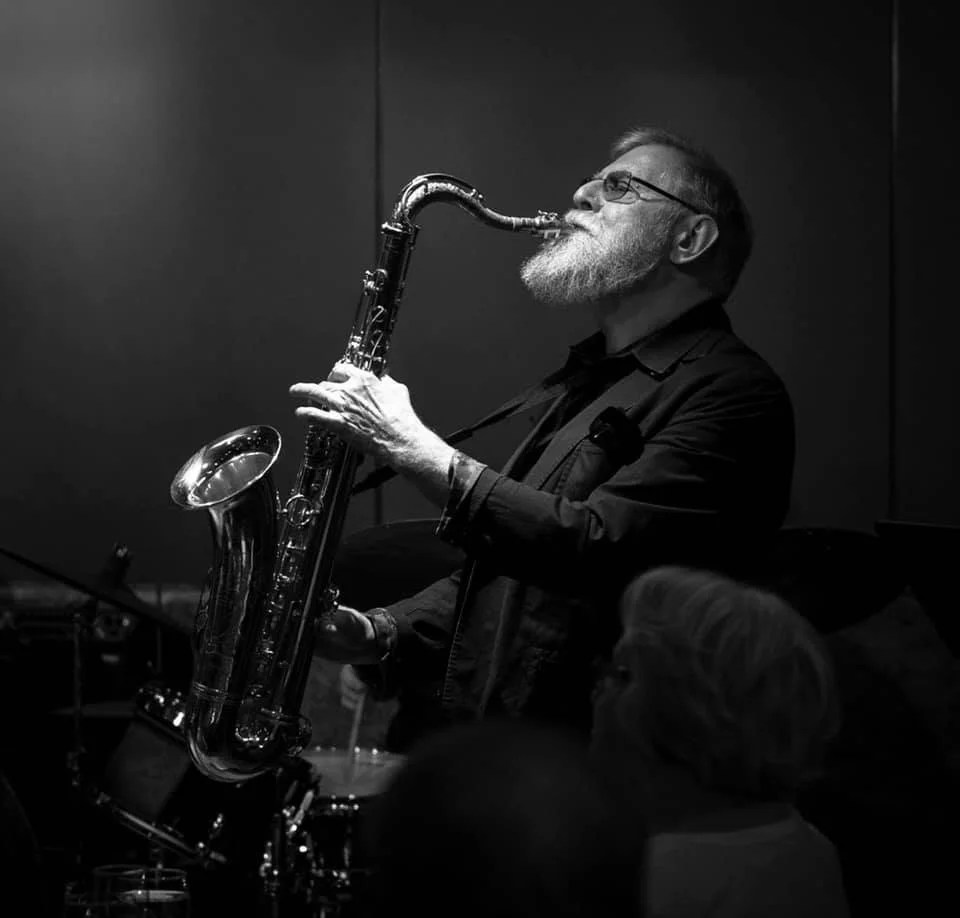
Lew Tabackin stands as a pioneering flutist and tenor saxophonist, celebrated for his unique and transformative approach to both instruments. Known for his virtuosic flute technique, his playing resonates with cross-cultural depth, energy, and an unmistakable passion. On tenor sax, his style is equally remarkable, marked by broad intervals, abrupt shifts in tempo and mood, and an intensity that underscores the expressive potential of his instrument. Without replicating past jazz legends, Tabackin has integrated diverse influences to shape a sound that is distinctly his own.Early Beginnings and Musical Education
Born in Philadelphia, Tabackin’s musical journey began with flute studies, later expanding to the tenor saxophone during high school. His formal education in flute was at the Philadelphia Conservatory of Music, where he graduated in 1962 under the guidance of composer Vincent Persichetti. After serving in the U.S. Army from 1962 to 1965, he moved to New Jersey, and soon thereafter to New York, where he began performing with notable jazz musicians, including Tal Farlow and Don Friedman.New York Jazz Scene and Big Band Collaborations
In New York, Tabackin quickly established himself on the jazz scene, performing with big bands led by jazz icons like Cab Calloway, Maynard Ferguson, Joe Henderson, Thad Jones and Mel Lewis, and Clark Terry. During the late 1960s, he led his own trio at La Boheme in Philadelphia and collaborated with artists such as Donald Byrd, Elvin Jones, and Roland Hanna. His versatility and artistry caught the attention of television producers, leading him to work with Doc Severinsen’s studio band on The Dick Cavett Show.
A Partnership with Toshiko Akiyoshi and the Birth of a Big Band
In 1968, Tabackin met pianist Toshiko Akiyoshi. The two later married and together formed the acclaimed Toshiko Akiyoshi Jazz Orchestra, which brought them both significant acclaim. After relocating to Los Angeles, Tabackin performed with jazz greats like Shelley Manne and led his own ensembles featuring musicians such as Billy Higgins and Charlie Haden. The couple’s frequent tours to Japan helped establish Tabackin’s international reputation.
Flute Recognition and Return to New York
Throughout the 1980s, Tabackin gained much-deserved recognition as an exceptional flutist, earning numerous DownBeat Critics’ and Readers’ Poll awards. In 1982, he and Akiyoshi returned to New York, reconnecting with the Manhattan jazz scene and solidifying Tabackin’s place as a prominent artist on both flute and sax. His 1990 debut album on Concord, Desert Lady, featuring jazz legends Hank Jones and Dave Holland, was followed by other notable works, such as I’ll Be Seeing You and What a Little Moonlight Can Do, with celebrated collaborators like Benny Green and Lewis Nash.
Touring and Recent Work
Lew Tabackin continues to captivate audiences worldwide, performing at jazz festivals and clubs, both as a soloist and with the Toshiko Akiyoshi Jazz Orchestra. His 1996 album Tenority marked a dedication to the tenor sax, while later releases, including Tanuki’s Night Out, Live in Paris, and Quartet, showcase his ongoing evolution as an artist. With a career spanning decades and continents, Tabackin remains a monumental figure in jazz, known for his visionary and passionate musicality.
NEWS
No news articles available.
Music
Video
Photos


Upcoming Performances
No upcoming performances available.